
Manage your innovation project portfolio with full visibility
Track progress, prioritize efforts, and deliver innovation results with confidence
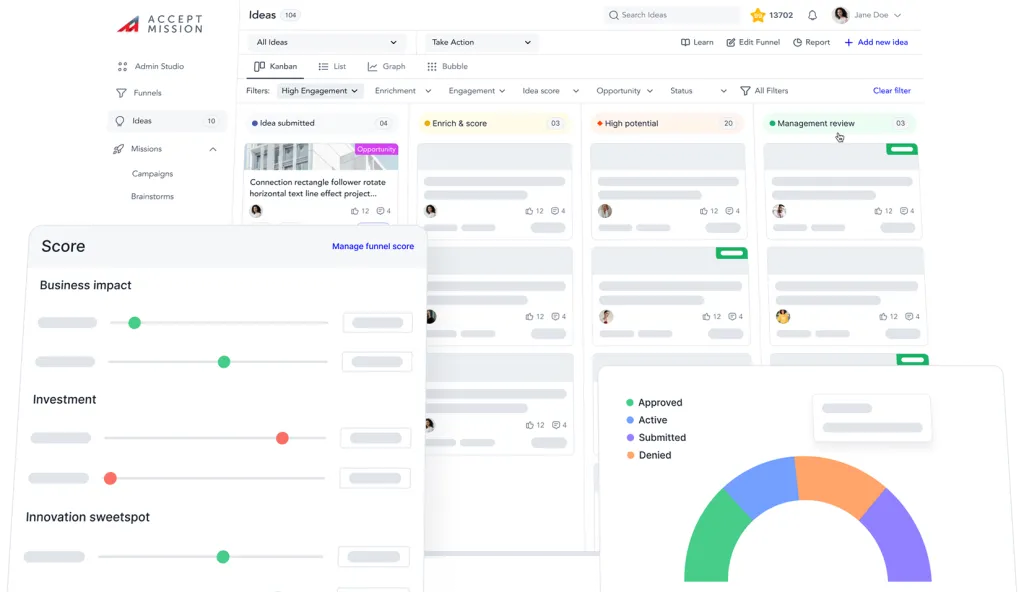
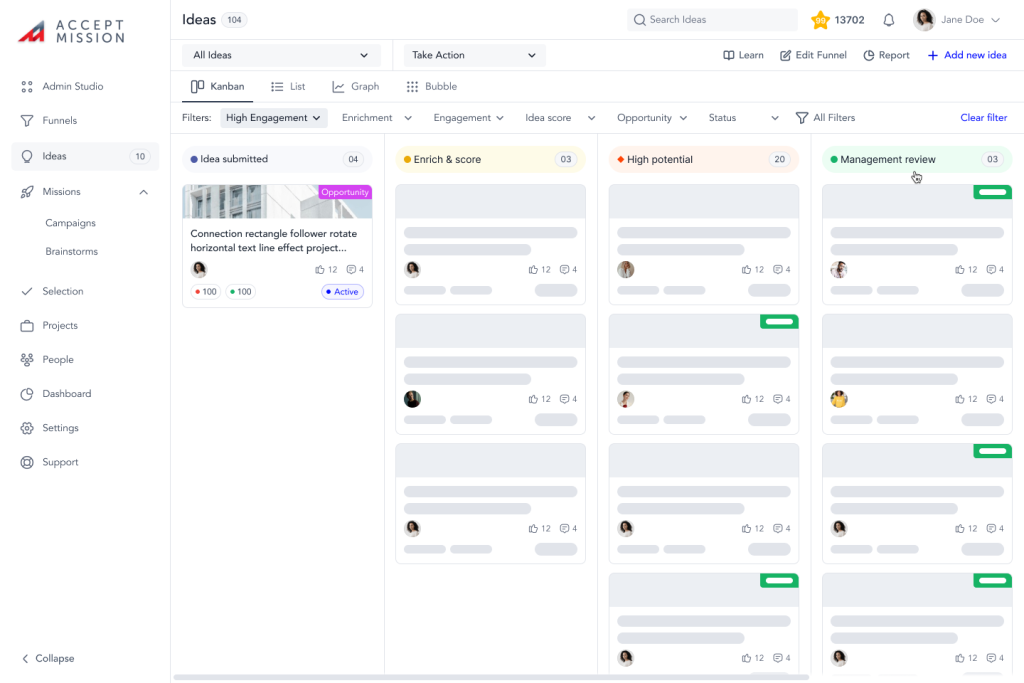
Selecting great ideas is only the beginning. Without a clear system to manage and follow through on innovation projects, momentum fades and results stall. Accept Mission helps you manage all innovation projects in one place, with tools to track timelines, assign tasks, and measure progress at every step.

















Why this is important
Most innovation initiatives fail because execution gets lost in complexity, silos, or spreadsheets. A structured portfolio view enables companies to stay focused, align teams, and drive continuous delivery of innovation value. Without portfolio management, even the best ideas can disappear into the noise.

Key steps to success
Take the next step and experience the software yourself

Learn more about Product Development
Product development generally encompasses creating something new.
This ranges from products, services, features, and processes that provide added value to your customers and employees.
As a part of innovative behavior, product development innovation aims to create products that meet customers’ needs and are profitable for the company.
Product innovation also includes:
- Researching customer needs and desires
- Designing and prototyping the product
- Testing and refining the design
- Bringing the product to market
- Identifying new opportunities
- Researching and analyzing market trends, and
- Staying ahead of the competition to create new and unique products that will be successful in the market
The product development process brings a diverse and robust product portfolio that can provide your business with substantial growth and increased profitability.
However, other than this benefit, innovative product development also brings the following:
1. Improves customer satisfaction
Successful product innovation directly addresses customer wants, problems, and needs.
Moreover, involving customers in innovative product development and other business processes via customer feedback can create a sense of ownership and engagement within them.
Hence, applying this innovation process leads to even greater customer satisfaction.
2. Develops competitive advantage
Product innovations bring competitive advantage in four ways:
Differentiation: By developing new and unique products or features, your company can differentiate itself from its competitors by providing a unique value proposition. This factor favorably positions your brand in the market.
Quality: If you focus on creating high-quality items and applying continuous improvement on existing products, you can establish a reputation for producing reliable and well-crafted results. Such incremental innovation sets key differences within the business, making you a leader in your chosen industry.
Cost efficiency: Streamlining the product development process and implementing cost-saving measures can create products at lower overall costs. As a result, you now have the ability to price your products more competitively.
Faster time to market: If you have well-defined and efficient product development, you can streamline every step and efficiently use your resources in bringing new products to market faster than competitors.
3. Drives innovation growth
The product development process plays a crucial role in driving innovation growth as it includes the following:
Research and Development (R&D): Product development involves conducting research and thorough analysis of new technologies, materials, and ideas that the organization can use to create new and improved products.
Market Intelligence: Product innovation teams monitor market trends and understand customer needs. Both are crucial for creating new products that meet the market’s changing demands.
Continuous Improvement: To stay ahead of the competition and maintain a competitive advantage, you improve existing products by incorporating new technologies, features, and customer feedback.
Collaboration: Creating more innovation needs collaboration among different departments. The new ideas they produce from their brainstorming sessions drive innovation growth. This collaboration allows teams to share ideas, knowledge, and expertise to create new and improved products.
Experimentation: As part of innovative product development, conducting thorough experiments can lead to new discoveries and breakthroughs that drive innovation growth.
4. Promotes relevance to the industry
Product innovation keeps up with industry trends and takes current market demands into consideration to produce timely products, which is important in fast-moving industries and other businesses with constantly emerging technologies.
It also generates increased revenue, sales, and market share, especially when competing products don’t meet customer needs the same way.
In addition, when you release products in a timely manner, you can optimize your resources, which in a way, helps you reduce costs and improve efficiency.
This rapid pace of product development can get you the feedback you need to improve your existing products.
5. Leads to higher business revenue gains
As an accumulated result of all the above benefits, product development allows you to gain higher business revenue.
Overall, innovation product development introduces new products, expands market share, increases sales and repeat business, minimizes costs, and builds brand loyalty.
You can improve your product development process in six steps:
Step #1: Gather ideas
The key to successful product development is understanding the needs and wants of your customers.
You can gain a deeper understanding of your target market by gathering ideas and insights through various research methods, such as online surveys, focus groups, and in-depth interviews.

Then, you can use this information to identify new product opportunities, improve existing products, and make informed product features and design decisions.
Overall, utilizing customer research and feedback can greatly improve your product development process by ensuring that your products meet your customers’ needs, increasing your chances of success in the market.
Step #2: Create product concepts
To ensure product success, it is important to not only understand what your customers want. But also to consider the industry’s current business environment.
By developing product concepts that solve problems and correspond with customer demands, you can increase your product’s chances of success in the market.
This includes understanding not only what your customers want but also other vital information, such as the industry’s broader trends, challenges, opportunities, regulations, and economic factors that may cause significant impacts on the business.
Step #3: Validate ideas and prioritize
To ensure that new product concepts have the potential to be successful in the market, it is important to validate and prioritize them through concept testing.
This process involves presenting the concepts to potential customers and gathering feedback on which concepts they find most appealing, valuable, and useful.

Through concept testing, companies can gain a deeper understanding of which concepts resonate with their target market and which may not be well received.
By comparing the performance of different concepts, you can make informed decisions about which concepts to move forward with and which ones to refine or discard.
Concept testing is a key step in product development that allows companies to prioritize their efforts, focus on the most promising concepts, and increase the chances of success in the market.
Step #4: Select the best ideas
Carefully evaluating and selecting the most promising ideas can increase your chances of succeeding in the market and achieving your business goals.
One of the key ways to select the best ideas is through a thorough evaluation process.
This can involve conducting market research, analyzing customer feedback, and assessing the feasibility and profitability of different ideas.
By gathering data and insights from these activities, you can better understand which ideas align with your vision, including which concepts you can execute cost-effectively and profitably.
Step #5: Improve and refine an existing product concept
Another important aspect of selecting the best ideas is considering the company’s goals and resources.
Companies should evaluate which ideas align with their overall business strategy and which ideas they have the capability to bring to market.

This can help ensure that the company is making the most efficient use of its resources and that the product development process is aligned with the company’s broader objectives.
Step #6: Develop the product
After identifying, resolving, and improving any issues or problems with the original concept, you can now develop a prototype of the product to test and refine its design, functionality, and overall experience.
A prototype is a physical or digital representation of the final product, allowing the development team to get a feel for how the product will look and work in real-world conditions.
It also provides a platform for further testing and feedback, which can be used to make any necessary improvements before finalizing the product for release.
Developing a prototype is an important step in the product development process because it allows the team to identify and fix any remaining issues or problems before the final product is manufactured and released to the market.
This helps to ensure that the product meets the needs and expectations of the target market and has a higher chance of success.
Your Content Goes Here
Accept Mission has all the tools that you need to successfully implement everything related to product development.
Idea collection
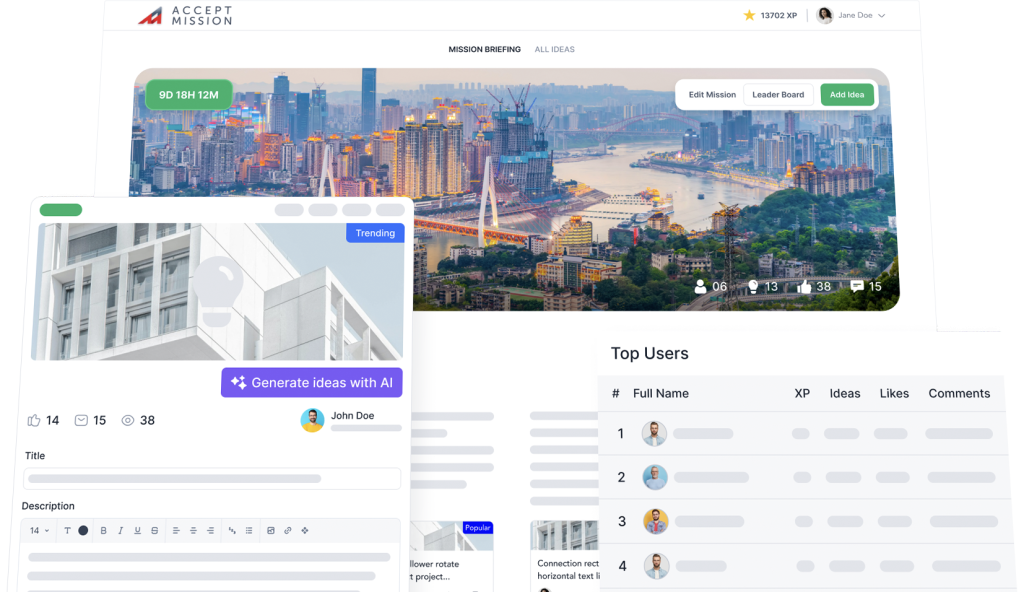
Our idea and innovation software at Accept Mission provide innovators, product managers, and owners with the capability to establish idea boxes for gathering and organizing concepts for both current and new products.
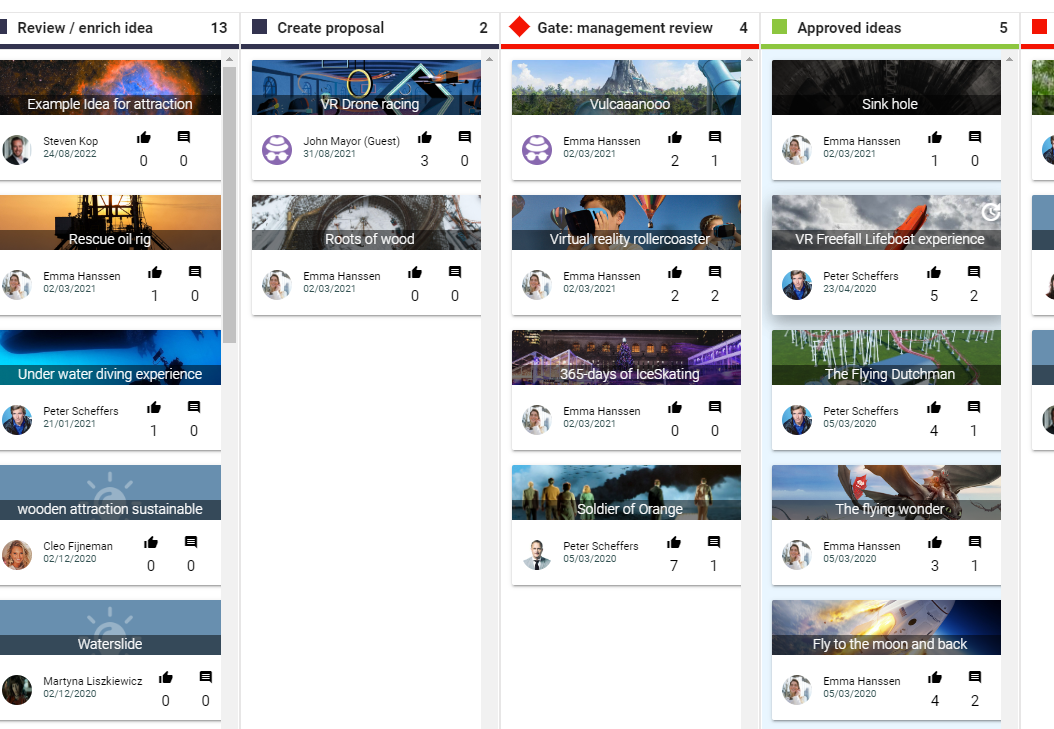
This allows for streamlined and efficient management of the idea-generation process, enabling the team to quickly and easily access and implement the best ideas to drive product development and improvement.
Collaboration
As an innovation software, Accept Mission facilitates real-time collaboration via “Boards.”
This tool allows teams, spread across different locations, to work on multiple projects or initiatives digitally, enhancing communication and providing up-to-date information.
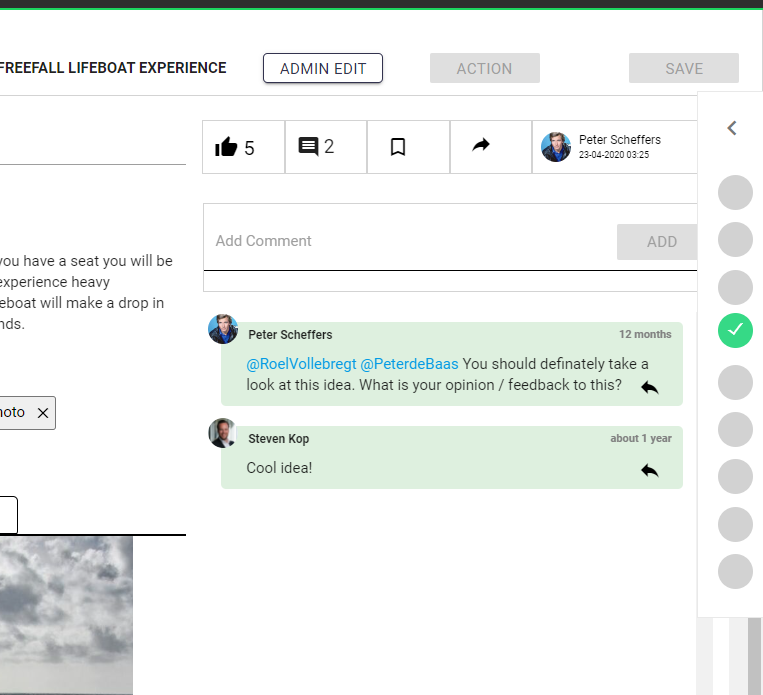
Boards also help keep projects organized, and on schedule, and provides stakeholders and team members access to the same real-time data, contributing to the success of projects and initiatives.
Employee engagement
To engage people in your innovation activities, our innovation platform can help you
- Launch innovation missions with clear and specific objectives
- Use gamification features to your advantage
- Encourage your employees to share their ideas via the undercover mode (anonymous)
Scoring and selection of ideas
We understand how important it is to make the right decision. With our collaboration software, you can conduct scoring based on the criteria of your choice.
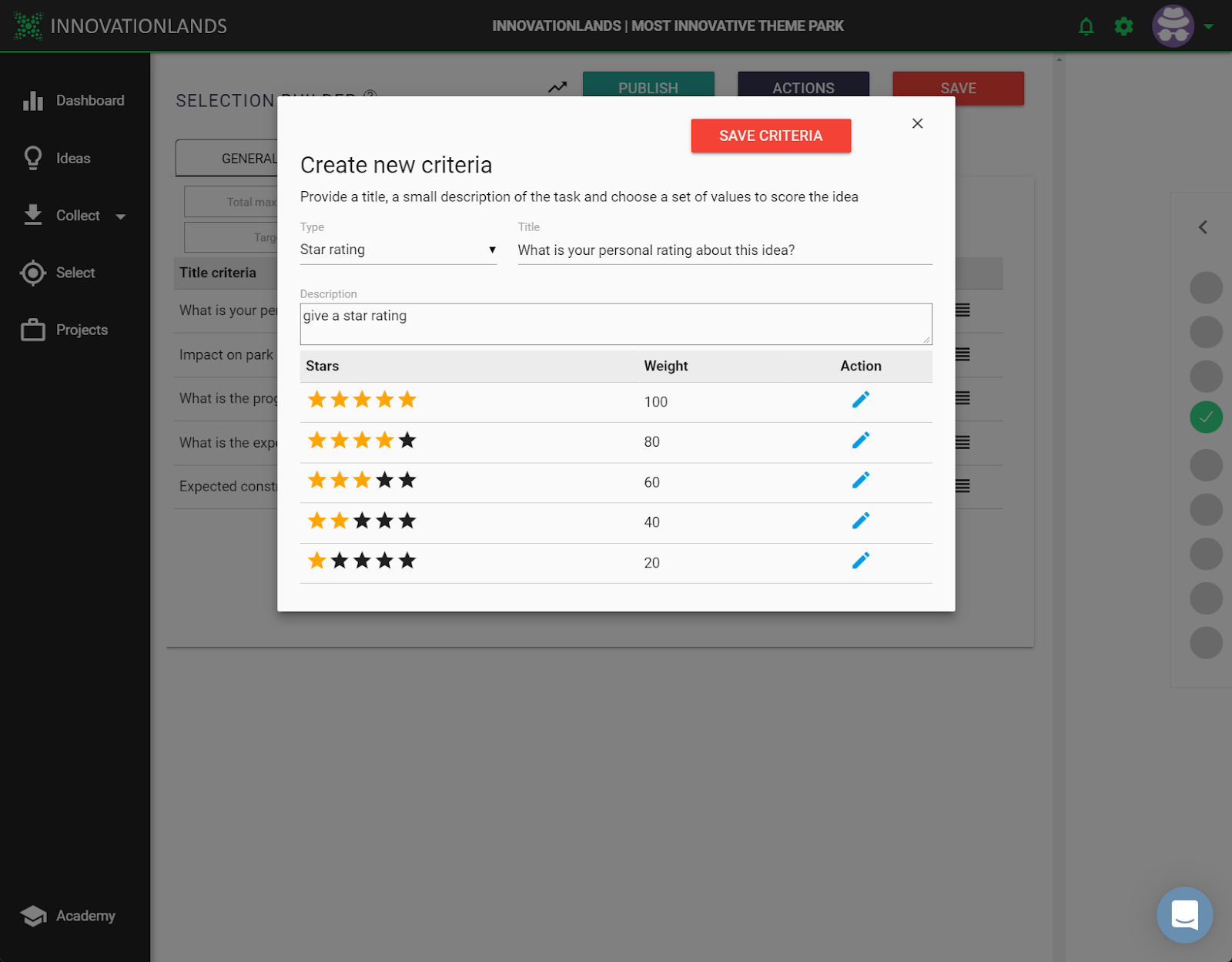
Note that with Accept Mission, you can implement three types of scoring for a better selection of ideas:
- Public scoring
- Admin scoring and selection.
- Expert scoring and selection
Report
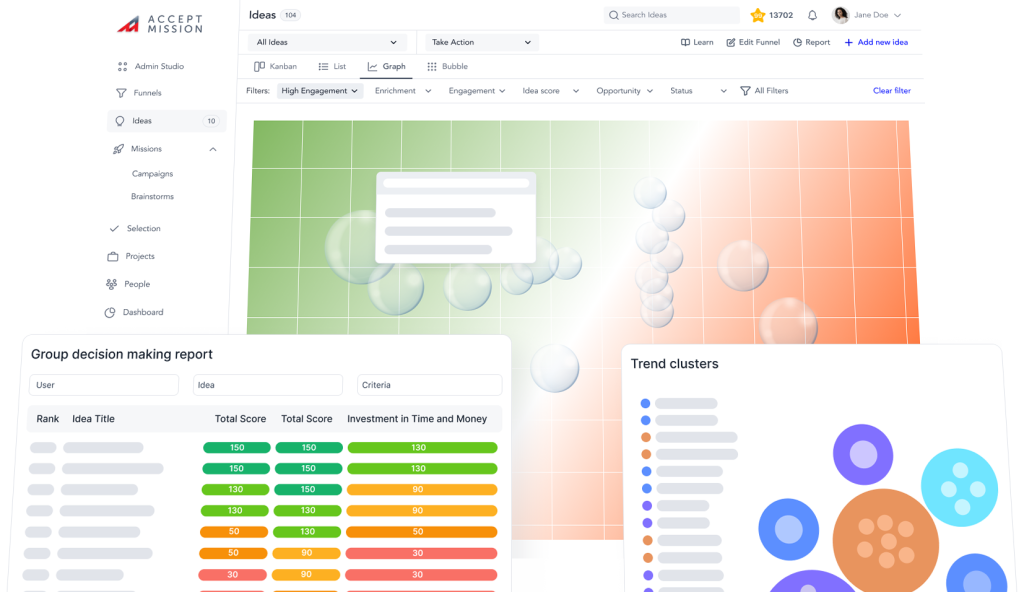
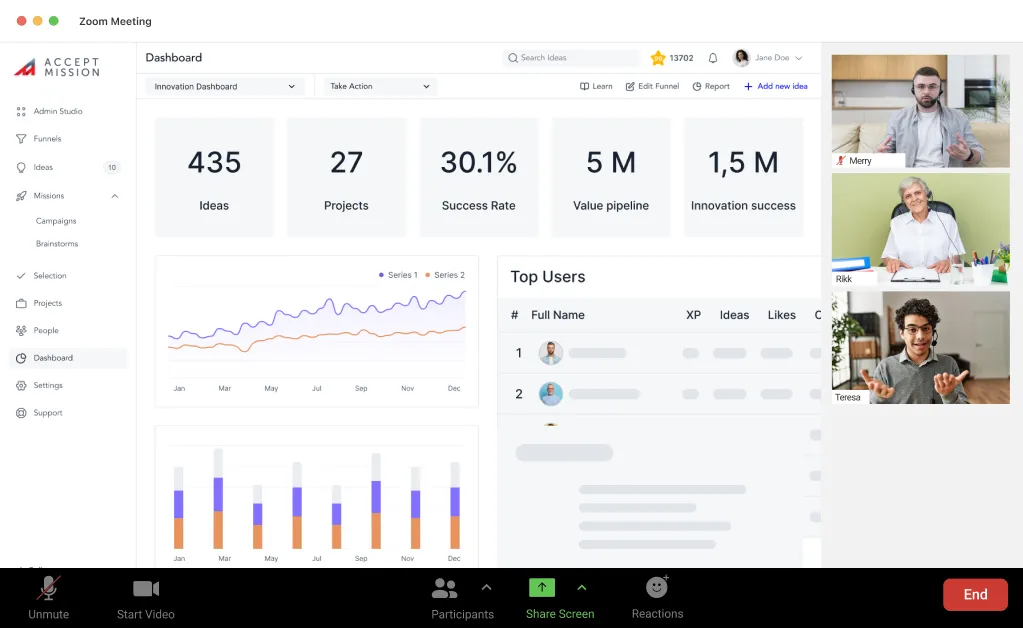
Our innovation dashboard provides a comprehensive view of the innovation achievements on our platform, including an idea funnel, top 5 projects, idea boxes, ideations, boards, and more.
Get a clear understanding of all the progress made by your organization.






 English
  Dutch
Dutch  Portuguese
  Spanish
  French
  German
  Arabic